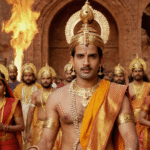


Discover how Sanjaya’s supernatural vision in Bhagavad Gita 1.2 teaches us to see beyond surface appearances and find divine guidance in life’s most challenging moments
Table of Contents
Introduction: The Voice of Truth Speaks
After King Dhritarashtra’s anxious question in the previous verse, Bhagavad Gita Chapter 1 Verse 2 introduces us to one of literature’s most extraordinary characters – Sanjaya, the divine narrator whose supernatural vision allows him to witness and report the sacred dialogue between Lord Krishna and Arjuna from hundreds of miles away.
This second verse of Bhagavad Gita isn’t just a transition in the narrative; it represents the profound spiritual principle of divya-drishti (divine sight) – the ability to perceive truth beyond physical limitations. In our modern world of information overload and conflicting perspectives, Sanjaya’s clear vision offers a timeless model for finding authentic guidance and objective truth.
The Sanskrit Verse: Bhagavad Gita 1.2
Original Sanskrit Text:
सञ्जय उवाच |
दृष्ट्वा तु पाण्डवानीकं व्यूढं दुर्योधनस्तदा |
आचार्यमुपसङ्गम्य राजा वचनमब्रवीत् ||2||
Transliteration:
sañjaya uvācha
dṛiṣhṭvā tu pāṇḍavānīkaṁ vyūḍhaṁ duryodhanastadā
āchāryam upasaṅgamya rājā vachanam abravīt
Word-by-Word Meaning:
- Sanjaya uvacha – Sanjaya said
- Drishtva – Having seen/observed
- Tu – Indeed/but
- Pandava-anikam – The Pandava army
- Vyudham – Arranged in battle formation
- Duryodhanas – Duryodhana
- Tada – Then/at that time
- Acharyam – To the teacher (Dronacharya)
- Upasangamya – Having approached
- Raja – The prince/king
- Vachanam – Words/speech
- Abravit – Spoke
English Translation:
“Sanjaya said: Having seen the Pandava army arranged in battle formation, Prince Duryodhana approached his teacher Dronacharya and spoke these words.”
Deep Explanation: The Power of Divine Perspective
Who is Sanjaya?
Sanjaya holds a unique position in spiritual literature. He was the minister and charioteer of the blind King Dhritarashtra, but more importantly, he was blessed by Sage Vyasa with divya-drishti – supernatural vision that allowed him to:
- See events happening at great distances
- Hear conversations taking place miles away
- Perceive the inner thoughts and emotions of the participants
- Witness divine manifestations invisible to ordinary sight
- Remain completely objective despite his personal loyalties
The Spiritual Significance
1. The Witness Consciousness Sanjaya represents the witness consciousness – the part of us that can observe life’s dramas without being emotionally entangled. This detached awareness is essential for spiritual growth and wise decision-making.
2. Divine Grace and Qualification Sanjaya’s supernatural abilities weren’t earned through his own efforts but were bestowed as divine grace. This teaches us that spiritual insight often comes as a gift to those who are qualified through purity of heart and sincere seeking.
3. The Role of Objective Reporting In a world of biased information and subjective interpretations, Sanjaya’s completely accurate reporting demonstrates the possibility of perceiving and communicating truth without distortion.
The Scene Setting
This verse establishes the physical setting of the great battle while introducing us to Prince Duryodhana, whose actions will reveal the mindset of those who choose the path of darkness over light. By approaching his teacher Dronacharya, Duryodhana demonstrates the human tendency to seek validation for our predetermined choices rather than genuine guidance.
A Modern Story: The Executive’s Divine Vision
The Corporate Crisis
Let me share a contemporary story that illuminates the profound teachings of this ancient verse…
The Setting: GlobalTech Industries, during a major corporate restructuring that would affect 50,000 employees worldwide.
The Characters:
- Margaret Chen (Modern Sanjaya): Chief Transformation Officer known for her uncanny ability to see the “big picture”
- Richard Blackstone (Modern Dhritarashtra): CEO who’s been with the company for 30 years but feels overwhelmed by current challenges
- David Kumar (Modern Duryodhana): Ambitious Vice President leading the “efficiency at all costs” faction
The Gift of Clear Sight
Margaret had always possessed what her colleagues called “supernatural business intuition.” While others got lost in spreadsheets and quarterly reports, she could somehow perceive the deeper patterns – the real motivations behind corporate decisions, the long-term consequences of short-term choices, and the human dynamics that determined whether strategies would succeed or fail.
Her gift wasn’t mystical in the traditional sense, but it was remarkable enough that executives across the industry sought her counsel during times of crisis.
The Moment of Truth
On a cold Tuesday morning, Richard called Margaret into his corner office. The weight of the impending restructuring had taken its toll – he looked exhausted and uncertain.
“Margaret, I need your eyes on this situation,” he said, using his familiar phrase for requesting her objective analysis. “David’s team has presented what they call the ‘optimal efficiency model.’ They claim it will save us $2 billion annually and secure our competitive position for the next decade.”
He paused, staring out at the city skyline.
“But I can’t shake the feeling that I’m missing something crucial. You have that ability to see what the rest of us can’t. What’s really happening here?”
The Divine Vision Reveals Truth
Margaret had spent the previous week observing the various stakeholder meetings, not just listening to the presentations but watching the body language, noting what wasn’t being said, and paying attention to the deeper currents of motivation and fear flowing beneath the surface discussions.
Like Sanjaya witnessing the battlefield from a distance, she could see patterns that those emotionally invested in the outcomes couldn’t perceive.
“Richard,” she began carefully, “what I’m seeing is that David’s plan isn’t really about efficiency – it’s about positioning himself as the crisis hero who saved the company. The $2 billion in savings is real, but it comes at the cost of our innovation capacity, employee loyalty, and long-term market adaptability.”
She opened her tablet and showed him a visualization she’d created.
“Look at this pattern: every recommendation in his plan consolidates decision-making power in his division while eliminating the departments most likely to challenge his authority. He’s not approaching this restructuring as a student seeking wisdom – he’s approaching it like Duryodhana approaching Dronacharya, seeking validation for a predetermined battle plan.”
The Pattern Recognition
Margaret’s “divine vision” allowed her to see what Richard, being too close to the situation, couldn’t perceive:
- David had already decided on his course of action before conducting any analysis
- His team was selected based on loyalty rather than expertise
- The “efficiency model” was designed to eliminate his internal critics
- The projected savings were calculated using overly optimistic assumptions
- The human cost of the restructuring would create long-term productivity problems that weren’t being factored into the projections
The Duryodhana Syndrome
“This is what I call the Duryodhana Syndrome,” Margaret explained. “When people have already committed to a particular path, they don’t seek genuine counsel – they seek endorsement. David isn’t asking his advisors, ‘What should we do?’ He’s asking, ‘How can we justify what I’ve already decided to do?'”
This pattern, she noted, was epidemic in corporate culture: executives surrounding themselves with yes-men, seeking data that supported predetermined conclusions, and mistaking validation for wisdom.
The Deeper Teaching: Divine Vision in Daily Life
What is Divine Vision?
Bhagavad Gita Chapter 1 Verse 2 introduces the concept of divya-drishti through Sanjaya’s character. This doesn’t necessarily mean supernatural powers, but rather:
1. Clarity Beyond Personal Investment The ability to see situations objectively, without our personal desires distorting our perception.
2. Pattern Recognition The capacity to perceive underlying dynamics and long-term consequences that others miss.
3. Truth-Telling Ability The courage and skill to communicate difficult truths in ways that others can receive and act upon.
4. Witness Consciousness The development of the part of ourselves that can observe without being emotionally entangled.
The Modern Applications
In Professional Life:
- Seeing beyond office politics to understand real organizational dynamics
- Recognizing when presentations are seeking validation rather than input
- Perceiving the long-term consequences of short-term decisions
- Identifying the difference between leadership and position-seeking
In Relationships:
- Understanding the deeper needs behind surface complaints
- Recognizing when someone is seeking support versus seeking solutions
- Seeing patterns of behavior rather than isolated incidents
- Perceiving the emotional undercurrents in family or romantic dynamics
In Personal Growth:
- Observing our own motivations without judgment
- Recognizing when we’re seeking validation versus genuine guidance
- Seeing the patterns in our own decision-making processes
- Developing the capacity for honest self-reflection
The Spiritual Psychology of Objective Vision
Why Clear Sight is Rare
Bhagavad Gita 1.2 teaches us that divine vision is both a gift and a responsibility. Most people can’t see clearly because:
1. Emotional Investment When we have strong preferences about outcomes, our perception becomes biased toward information that supports what we want to believe.
2. Identity Protection We unconsciously filter information that might challenge our self-image or require us to change in uncomfortable ways.
3. Social Pressure The desire to fit in or maintain relationships can prevent us from seeing or speaking uncomfortable truths.
4. Immediate Gratification The pressure for quick solutions prevents the patient observation required for deep understanding.
Developing Your Inner Sanjaya
Daily Practices for Enhanced Perception:
1. The Observer Exercise Spend 10 minutes daily practicing witness consciousness – observing your thoughts and emotions without trying to change them.
2. The Pattern Journal Weekly, write about recurring patterns you notice in your relationships, work, and personal choices.
3. The Truth-Telling Practice Gradually increase your capacity for honest, compassionate communication in low-stakes situations.
4. The Bias Check Before making important decisions, ask yourself: “What am I hoping to prove? What would I prefer not to see?”
Real-Life Applications: Living with Divine Vision
In Leadership and Management
The Sanjaya Leader Principle: Develop the ability to see organizational dynamics clearly and communicate truth compassionately.
Practical Applications:
- Meeting Observation: Pay attention to what isn’t being said as much as what is
- Decision Auditing: Regularly examine whether you’re seeking validation or genuine input
- Perspective Seeking: Actively solicit viewpoints from people who aren’t invested in your preferred outcomes
- Pattern Recognition: Look for recurring themes in organizational challenges rather than treating each issue as isolated
In Family and Relationships
The Divine Vision Practice: See beyond surface behaviors to understand deeper needs and patterns.
Daily Applications:
- Conflict Resolution: Ask “What is this really about?” rather than focusing on surface complaints
- Child Guidance: Observe patterns in behavior rather than reacting to individual incidents
- Partnership Dynamics: Notice when disagreements are about deeper issues like respect, security, or autonomy
- Family Systems: Recognize how each person’s role affects the overall family dynamic
In Personal Development
The Inner Witness Method: Cultivate the part of yourself that can observe without judgment.
Self-Development Practices:
- Decision Archaeology: Examine your past choices to identify unconscious patterns
- Motivation Investigation: Regularly ask yourself: “What am I really seeking in this situation?”
- Feedback Reception: Practice receiving difficult information without becoming defensive
- Truth Integration: Develop the courage to act on insights even when they require uncomfortable changes
The Corporate Resolution: When Divine Vision Transforms Decisions
Margaret’s Recommendation
Based on her clear sight of the situation, Margaret presented Richard with an alternative approach:
“Instead of implementing David’s efficiency model, what if we used this crisis as an opportunity to develop genuine organizational resilience? Rather than cutting costs by eliminating people and departments, we could invest in systems that make us more adaptable to future challenges.”
She outlined a comprehensive plan that would:
- Retain innovation capacity while reducing redundancy
- Develop employee skills rather than simply eliminating positions
- Create more distributed decision-making rather than concentrating power
- Build long-term competitive advantages rather than short-term cost savings
The Transformation
Richard, guided by Margaret’s divine vision, chose the path of genuine wisdom over the appealing shortcut. The implementation took longer and required more nuanced leadership, but the results vindicated her insight:
- Employee engagement increased rather than declined during the transition
- The company emerged more innovative and adaptable than before
- Long-term financial performance exceeded the projections from David’s efficiency model
- GlobalTech became a case study in ethical corporate transformation
The David Outcome
Interestingly, David initially resisted the new direction but eventually became one of its strongest advocates. When presented with clear data about the superior outcomes, he was able to let go of his attachment to being seen as the crisis hero and instead became genuinely interested in learning effective leadership principles.
This mirrors the potential for transformation that exists even in those who initially choose the path of ego over wisdom.
The Science of Objective Perception
Modern Research on Clear Sight
Contemporary psychology and neuroscience validate the principles embedded in Bhagavad Gita Chapter 1 Verse 2:
Confirmation Bias Research: Studies show that people actively seek information that confirms their existing beliefs while avoiding information that challenges them – exactly the pattern Sanjaya transcends through divine vision.
Emotional Intelligence Studies: Research demonstrates that the ability to observe emotions without being controlled by them is one of the strongest predictors of leadership effectiveness and life satisfaction.
Mindfulness Neuroscience: Brain imaging reveals that meditation practices develop the neural networks associated with witness consciousness and objective observation.
Systems Thinking Research: Studies in organizational behavior confirm that the ability to see patterns and relationships rather than isolated events is crucial for effective decision-making in complex situations.
The Neuroscience of Witness Consciousness
Modern brain research shows that developing witness consciousness – the ability to observe thoughts and emotions without being overwhelmed by them – strengthens the prefrontal cortex while reducing reactivity in the amygdala. This creates exactly the kind of clear, calm perception that Sanjaya demonstrates.
Practical Exercises for Developing Divine Vision
1. The Daily Observation Practice
Each morning, set an intention to observe one specific aspect of human behavior throughout the day – body language, speech patterns, or emotional responses. Practice seeing without judging.
2. The Perspective Multiplier
When facing important decisions, deliberately seek out three different viewpoints from people who have different stakes in the outcome than you do.
3. The Pattern Recognition Journal
Weekly, write about recurring themes you notice in your professional challenges, relationship dynamics, and personal growth areas. Look for the deeper patterns beneath surface events.
4. The Truth-Telling Gradient
Start practicing honest, compassionate communication in low-stakes situations, gradually building your capacity to speak difficult truths with kindness and clarity.
5. The Sanjaya Meditation
Daily, spend 10-15 minutes in meditation, practicing witness consciousness – observing your thoughts, emotions, and physical sensations without trying to change or judge them.
The Global Relevance: Divine Vision in Society
Media and Information Literacy
In our age of information overload and “alternative facts,” the principles embodied by Sanjaya are more crucial than ever:
Objective Reporting: The ability to communicate facts without bias or agenda Pattern Recognition: Seeing underlying trends rather than being distracted by surface events Source Evaluation: Distinguishing between sources seeking truth and those seeking validation Long-term Perspective: Understanding how current events fit into larger historical patterns
Leadership in Crisis
Whether in corporate boardrooms, political halls, or community organizations, the Sanjaya principle of divine vision offers essential guidance:
Crisis Recognition: Seeing problems clearly before they become catastrophic Stakeholder Understanding: Perceiving the real needs and motivations of all parties involved Solution Integration: Finding approaches that address root causes rather than symptoms Communication Clarity: Presenting complex information in ways that enable wise decision-making
Integration with Spiritual Practice
The Sanjaya Sadhana (Spiritual Practice)
Use Bhagavad Gita 1.2 as a foundation for developing divine vision:
Morning Intention: Begin each day by asking for the grace to see clearly and speak truthfully.
Midday Check-in: Pause to observe: “Am I seeing this situation clearly, or are my preferences distorting my perception?”
Evening Reflection: Review the day: “Where did I demonstrate witness consciousness? Where did I get emotionally entangled and lose objectivity?”
The Blessed Vision Prayer
“Grant me the divine vision to see situations clearly, the wisdom to understand what I observe, and the compassion to communicate truth in ways that serve the highest good of all involved.”
Connection to the Larger Gita Teaching
Setting the Stage for Krishna’s Wisdom
Bhagavad Gita Chapter 1 Verse 2 establishes Sanjaya as the reliable narrator who will report the divine dialogue between Krishna and Arjuna. His objectivity and supernatural perception ensure that we receive the spiritual teachings without distortion.
This verse teaches us that before we can receive divine wisdom, we must develop the capacity for clear perception. The teachings of the Gita are most transformative when received through the clarity of witness consciousness rather than the fog of emotional reactivity.
The Preparation for Divine Teaching
Just as Sanjaya needed divine vision to perceive and report Krishna’s teachings, we need to develop our own capacity for clear sight to fully receive and integrate spiritual wisdom into our daily lives.
Conclusion: Seeing with the Eyes of Eternity
Bhagavad Gita Chapter 1 Verse 2 introduces us to one of the most important principles in spiritual development: the cultivation of divine vision – the ability to see truth clearly, without the distortion of personal preference or emotional reactivity.
Sanjaya’s role as the objective narrator of the sacred dialogue reminds us that spiritual wisdom requires not just sincere seeking, but also the development of clear perception. In our modern world of competing narratives and information overload, the Sanjaya principle becomes even more essential.
The verse teaches us that divine vision is both a gift and a responsibility. Like Margaret in our modern story, those blessed with clear sight have an obligation to share their perception in service of truth and the highest good of all involved.
Whether we’re facing corporate crises, family conflicts, or personal crossroads, the ability to step back and observe with the clarity of witness consciousness can transform our decision-making and our relationships. We learn to distinguish between seeking validation for predetermined choices and genuinely seeking wisdom and guidance.
As we continue through the Bhagavad Gita’s profound teachings, Sanjaya’s divine vision becomes our model for how to receive and integrate spiritual wisdom. When we approach the Gita’s teachings with the clarity of witness consciousness rather than the agenda of finding support for our existing beliefs, the ancient wisdom becomes a living guide for modern challenges.
The blind king Dhritarashtra represents our human tendency to rely on others’ eyes when our own vision is clouded by attachment. Sanjaya represents the blessed capacity for clear sight that is available to all of us when we develop the spiritual maturity to see beyond our personal preferences to the truth of any situation.
In every moment, we have the choice to see with eyes clouded by desire and fear, or to cultivate the divine vision that perceives reality clearly and compassionately. Bhagavad Gita Chapter 1 Verse 2 reminds us that this choice of perception determines not just what we see, but who we become.
Continue Reading: The next verse begins the detailed description of the opposing armies, as seen through Sanjaya’s divine vision. Explore Bhagavad Gita Chapter 1 Verse 3 to continue this transformative journey into ancient wisdom for modern living.
How are you developing your own “divine vision” in daily life? Share your experiences with cultivating witness consciousness and objective perception. The Bhagavad Gita’s timeless teachings offer practical guidance for seeing clearly in a world of competing narratives and emotional complexity.
About This Exploration
This analysis of Bhagavad Gita Chapter 1 Verse 2 draws from traditional Sanskrit commentaries and contemporary applications, demonstrating how ancient wisdom provides practical guidance for modern challenges. The interpretation emphasizes the development of witness consciousness and objective perception as essential skills for spiritual growth and effective living.