

Table of Contents
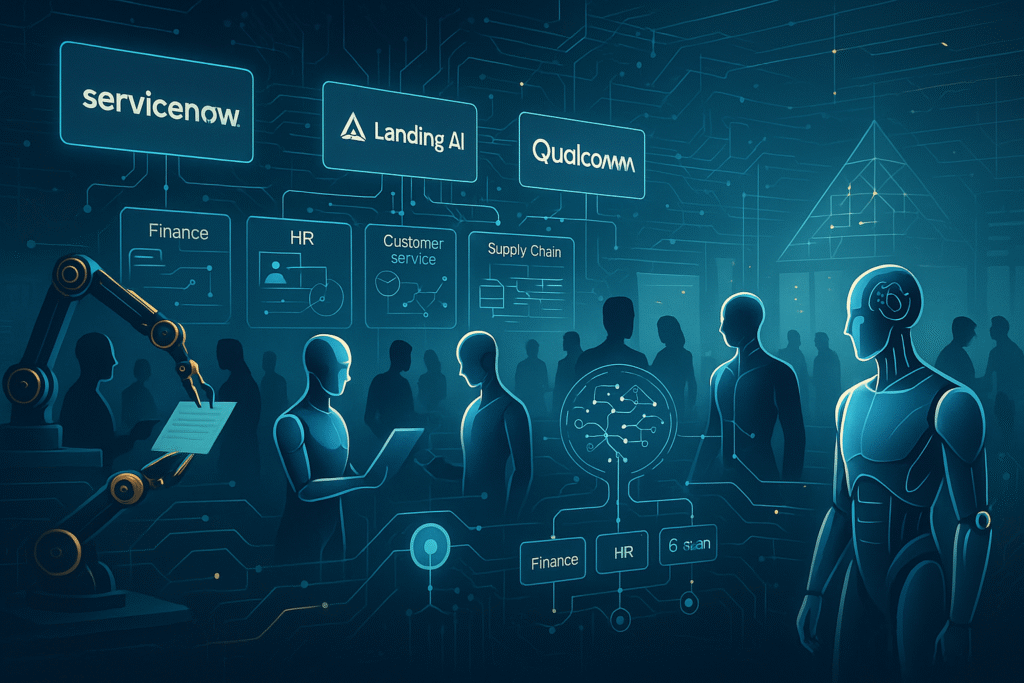
The artificial intelligence landscape is experiencing a seismic transformation as agentic AI emerges as the defining technology of 2024-2025. Unlike traditional AI systems that simply respond to prompts, agentic AI represents autonomous intelligence that can perceive, reason, plan, and execute complex tasks without constant human supervision. Major tech giants and innovative startups are racing to dominate this revolutionary field, with recent developments from Qualcomm, Andrew Ng’s LandingAI, and ServiceNow signaling the dawn of truly intelligent enterprise automation.
What is Agentic AI? The Ultimate Guide to Autonomous Intelligence
Agentic AI refers to advanced artificial intelligence systems that possess agency – the ability to act independently, make strategic decisions, and adapt to changing circumstances in real-time. Unlike conventional AI models that require explicit instructions, agentic AI systems can:
- Autonomously plan and execute multi-step workflows
- Learn from interactions and continuously improve performance
- Make contextual decisions based on environmental changes
- Coordinate across multiple systems and data sources
- Proactively anticipate user needs and business requirements
According to IBM’s research, agentic AI represents the next evolutionary leap in artificial intelligence, moving from reactive systems to proactive digital partners that can handle complex business processes with minimal human oversight.
Major Industry Breakthroughs Driving the Agentic AI Revolution
Qualcomm’s Snapdragon Chips: Powering On-Device Agentic Intelligence
Qualcomm’s recent Snapdragon Summit unveiled revolutionary hardware specifically designed for agentic AI applications. The company introduced two flagship processors:
Snapdragon 8 Elite Gen 5 (Mobile)
- 20% CPU performance improvement with 35% better efficiency
- 37% faster Hexagon NPU for enhanced on-device AI processing
- First mobile platform supporting Advanced Professional Video recording
- Built from the ground up for agentic AI applications
Snapdragon X2 Elite (PC)
- Near desktop-class performance with laptop-class efficiency
- Exceptional multi-threaded throughput outperforming Intel, AMD, and Apple
- Hybrid AI capabilities blending local inference with cloud models
- Optimized for proactive, context-aware experiences
Qualcomm CEO Cristiano Amon emphasized the company’s vision of “the ecosystem of you” – where AI agents seamlessly coordinate across phones, PCs, earbuds, and wearables, delivering personalized, context-aware assistance while maintaining privacy through on-device processing.
Andrew Ng’s LandingAI: Specialized Agentic Document Intelligence
Andrew Ng’s LandingAI has launched ADE DPT-2, representing a paradigm shift from general-purpose AI to specialized agentic intelligence. This breakthrough addresses the complex reality of enterprise document processing:
Key Innovations of DPT-2:
- Schema-aware pipelines for reliable extraction across millions of document variations
- Agentic workflows that iteratively examine documents like human experts
- Advanced layout detection for stamps, signatures, checkboxes, and merged cells
- Horizontal GPU scaling handling millions of pages per day
Andrew Ng explained the philosophical approach: “We’re past the era of one-size-fits-all models. For AI workloads, we need different types and amounts of intelligence to do different things.”
The platform delivers measurable impact across industries:
- Finance: Accelerated loan approvals through automated contract validation
- Healthcare: Precise capture of patient forms and lab reports
- Insurance: Processing handwritten claims without losing context
- Compliance: Automated document analysis with full audit trails
ServiceNow’s AI Experience: Redefining Enterprise User Interfaces
ServiceNow’s ambitious AI Experience platform represents a strategic bet that the interface, not the model, will determine who wins the enterprise AI race. The platform challenges industry giants Microsoft and Salesforce by positioning itself as the central hub for all agentic AI workflows.
AI Experience Key Features:
- Multimodal AI interface supporting text, voice, and image interactions
- AI Control Tower for governing and managing multiple LLMs securely
- Workflow Data Fabric connecting every system across enterprise functions
- Autonomous CRM agents handling 89% of support workflows automatically
ServiceNow CEO Bill McDermott declared: “AI is civilization’s greatest opportunity, the gateway to prosperity and a requirement for survival. We are turning complexity into simplicity.”
The platform delivers proven ROI with ServiceNow internally realizing over $350M in savings over the past 12 months, while customers like Adobe, EY, and Pure Storage report significant productivity gains.
Enterprise Applications: Where Agentic AI Delivers Maximum Impact
1. Intelligent Document Processing
Agentic AI transforms how organizations handle unstructured data:
- Automated contract analysis with 99%+ accuracy rates
- Multi-language invoice processing across global operations
- Compliance document review with real-time risk assessment
- Legal discovery automation reducing review time by 80%
2. Customer Service Revolution
Autonomous customer service agents provide:
- 24/7 multilingual support with human-level empathy
- Proactive issue resolution before customers report problems
- Intelligent escalation to human experts when needed
- Personalized recommendations based on customer history
3. Supply Chain Optimization
Agentic AI agents monitor and optimize:
- Real-time inventory management across multiple warehouses
- Predictive demand forecasting with 95% accuracy
- Automated supplier negotiations and contract management
- Risk mitigation through continuous market monitoring
4. Financial Operations Automation
Intelligent financial agents handle:
- Automated accounts payable/receivable processing
- Fraud detection with real-time transaction monitoring
- Regulatory compliance reporting with zero human intervention
- Investment portfolio optimization based on market conditions
The Technology Stack Behind Agentic AI Success
Core Components of Agentic Systems:
1. Perception Layer
- Multi-modal input processing (text, voice, images, sensor data)
- Real-time data ingestion from multiple enterprise systems
- Context awareness understanding user intent and environmental factors
2. Reasoning Engine
- Advanced planning algorithms for multi-step task execution
- Decision-making frameworks based on business rules and objectives
- Learning mechanisms that improve performance over time
3. Action Layer
- API integrations with enterprise software systems
- Workflow orchestration across departments and functions
- Human-in-the-loop mechanisms for critical decisions
4. Governance Framework
- Security controls protecting sensitive data and operations
- Audit trails for compliance and accountability
- Performance monitoring ensuring optimal system behavior
Industry Adoption Trends and Market Predictions
Current Market Dynamics
Gartner research predicts that while over 40% of agentic AI projects may be canceled by 2027 due to unrealistic expectations, successful implementations will drive significant business value:
- Resource efficiency improvements of 30-50%
- Task automation reducing manual work by 60%
- New business model innovations creating competitive advantages
Investment and Growth Projections
McKinsey analysis indicates that agentic AI offers a way to break out of the “gen AI paradox” by automating complex business processes rather than just generating content.
Key growth drivers include:
- Enterprise digital transformation accelerating post-pandemic
- Labor shortage solutions in critical industries
- Competitive pressure to adopt AI-first business processes
- Regulatory compliance requirements driving automation needs
Benefits and ROI of Agentic AI Implementation
Quantifiable Business Benefits:
Operational Efficiency
- 60-80% reduction in manual processing time
- 24/7 operations without human fatigue or errors
- Scalable workforce that grows with business demands
- Consistent quality eliminating human variability
Cost Optimization
- Labor cost reduction of 40-60% for routine tasks
- Error reduction saving millions in compliance penalties
- Accelerated time-to-market for new products and services
- Infrastructure optimization through intelligent resource allocation
Strategic Advantages
- Real-time decision making based on comprehensive data analysis
- Proactive problem solving preventing issues before they occur
- Personalized customer experiences at scale
- Innovation acceleration through automated research and development
Soft Benefits and Competitive Edge:
- Employee satisfaction through elimination of repetitive tasks
- Customer loyalty improved through superior service experiences
- Market responsiveness adapting quickly to changing conditions
- Risk mitigation through continuous monitoring and compliance
Implementation Challenges and Success Strategies
Common Implementation Hurdles:
Technical Challenges
- Data integration complexity across legacy systems
- Model training requirements for specialized use cases
- Scalability concerns handling enterprise-level workloads
- Security and privacy protecting sensitive information
Organizational Barriers
- Change management resistance from existing workforce
- Skills gap in AI and automation technologies
- Budget constraints for comprehensive implementations
- Governance frameworks ensuring responsible AI deployment
Best Practices for Success:
1. Start with High-Impact, Low-Risk Use Cases
- Document processing automation with clear ROI metrics
- Customer service enhancement with human oversight
- Data analysis tasks that don’t require critical decisions
- Routine compliance reporting and monitoring
2. Invest in Change Management
- Employee training programs on AI collaboration
- Clear communication about job evolution, not replacement
- Phased implementation allowing gradual adaptation
- Success story sharing building organizational confidence
3. Ensure Robust Governance
- Ethics committees overseeing AI deployment decisions
- Regular audits of AI system performance and bias
- Transparent reporting on AI decision-making processes
- Compliance frameworks meeting industry regulations
Future Outlook: The Next Phase of Agentic AI Evolution
Emerging Trends for 2025-2026:
Multi-Agent Orchestration
- Coordinated AI teams working together on complex projects
- Specialized agents for different business functions
- Cross-functional collaboration between AI and human teams
- Dynamic resource allocation based on workload demands
Hyper-Personalization
- Individual user adaptation learning personal preferences
- Context-aware assistance understanding situational needs
- Predictive recommendations anticipating future requirements
- Emotional intelligence recognizing and responding to human emotions
Industry-Specific Solutions
- Healthcare agents managing patient care workflows
- Financial advisors providing personalized investment guidance
- Manufacturing optimization through intelligent production planning
- Legal research assistants handling complex case analysis
Technology Convergence
Agentic AI will integrate with emerging technologies:
- Edge computing enabling real-time local processing
- 5G networks supporting low-latency AI interactions
- Quantum computing solving complex optimization problems
- Blockchain ensuring secure and transparent AI operations
Conclusion: Embracing the Agentic AI Revolution
The agentic AI revolution represents the most significant shift in enterprise technology since the adoption of the internet. Organizations that embrace this transformation early will gain substantial competitive advantages through:
- Unprecedented automation of complex business processes
- Real-time intelligence driving faster, better decisions
- Scalable operations growing without proportional cost increases
- Enhanced customer experiences through personalized, proactive service
Success in the agentic AI era requires strategic vision, technical expertise, and organizational commitment to change. Companies must invest in the right technology platforms, develop internal capabilities, and create governance frameworks that ensure responsible, effective AI deployment.
As Andrew Ng emphasized, we’re entering an era where specialized AI agents will handle specific business functions better than general-purpose models. ServiceNow’s bet on AI-first interfaces and Qualcomm’s hardware optimization for on-device agents signal that the infrastructure for agentic AI is rapidly maturing.
The question isn’t whether agentic AI will transform your industry – it’s whether your organization will be a leader or follower in this revolutionary transformation. The time to start planning and implementing agentic AI solutions is now.
Ready to explore agentic AI for your organization? Contact our AI transformation experts to develop a customized roadmap for implementing autonomous intelligence solutions that drive measurable business results.